
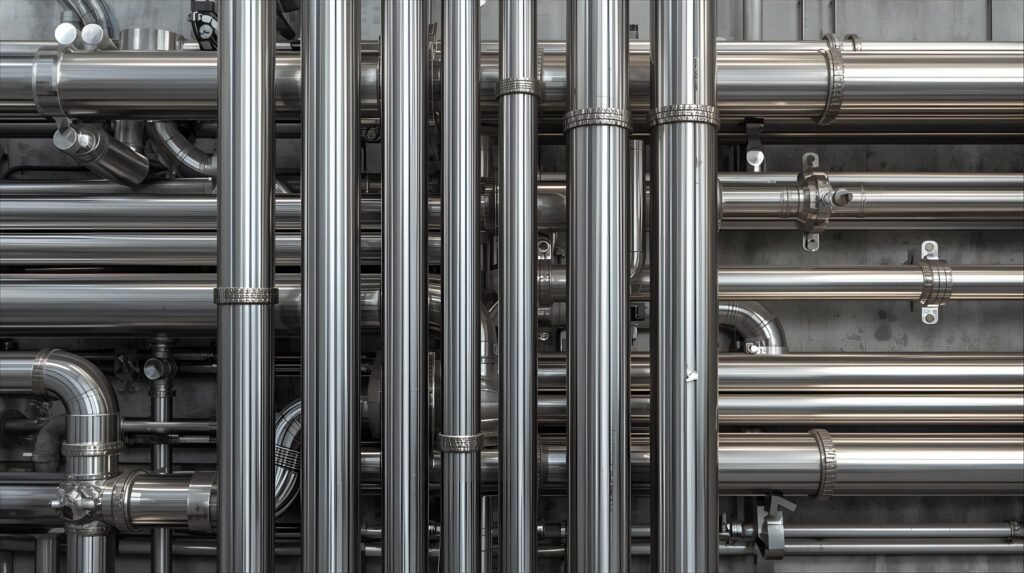
Stainless Steel Sanitary Pipes SS 304 and 316 Grade
Introduction
In industries where hygiene and purity are paramount, such as food processing, pharmaceuticals, and biotechnology, the choice of materials for sanitary pipes is critical. Stainless steel, particularly grades 304 and 316, stands out as the preferred option for these applications. This blog post will delve into the reasons why SS 304 and SS 316 are considered the best grades for stainless steel sanitary pipes, covering their advantages, applications, and the technical factors that underpin their widespread use. Before exploring the specifics of SS 304 and SS 316, it’s essential to understand what makes stainless steel unique. Stainless steel is an alloy of iron, chromium, and other elements, notably nickel, molybdenum, and titanium. The presence of chromium, typically at a minimum of 10.5%, allows the steel to form a passive layer of chromium oxide on its surface. This layer protects the underlying metal from corrosion, giving stainless steel its characteristic resistance to rust and staining.
Key Properties of Stainless Steel
- Corrosion Resistance: The chromium oxide layer provides excellent resistance to corrosion, making stainless steel suitable for use in harsh environments.
- Hygiene: Stainless steel is non-porous and easy to clean, preventing the build-up of bacteria and other contaminants.
- Durability: Stainless steel is strong and durable, capable of withstanding high pressures and temperatures.
- Weldability: Many grades of stainless steel, including 304 and 316, are readily weldable, allowing for easy fabrication and installation.
- Versatility: Stainless steel is available in various grades and finishes, making it suitable for a wide range of applications.
- Aesthetic Appeal: Stainless steel has a bright, clean appearance that is visually appealing in many applications.
SS 304: The Workhorse of Sanitary Piping
SS 304, also known as 18/8 stainless steel due to its composition of approximately 18% chromium and 8% nickel, is one of the most widely used grades of stainless steel globally. Its versatility, corrosion resistance, and cost-effectiveness make it an excellent choice for numerous applications, including sanitary piping.
Advantages of SS 304 in Sanitary Pipes
- Excellent Corrosion Resistance: SS 304 provides excellent resistance to a wide range of corrosive environments, including many acids, alkalis, and chlorides. It is particularly effective in resisting oxidation.
- Good Weldability: SS 304 is readily weldable using various techniques, including TIG, MIG, and spot welding. This allows for easy fabrication and installation of sanitary piping systems.
- Easy to Clean and Maintain: The smooth, non-porous surface of SS 304 makes it easy to clean and sterilize, preventing the build-up of bacteria and other contaminants.
- Cost-Effective: Compared to other grades of stainless steel, SS 304 is relatively cost-effective, making it an attractive option for many applications.
- High Tensile Strength: The high tensile strength of SS 304 allows it to withstand high pressures and temperatures, making it suitable for use in demanding environments.
Applications of SS 304 Sanitary Pipes
- Food and Beverage Industry: SS 304 is widely used in the food and beverage industry for transporting milk, juice, beer, and other products. Its corrosion resistance and ease of cleaning make it ideal for maintaining hygiene and preventing contamination.
- Dairy Industry: In dairy processing plants, SS 304 pipes are used for transporting milk, cream, and other dairy products. The material’s resistance to corrosion from milk acids and cleaning agents is crucial.
- Pharmaceutical Industry: SS 304 is used in the pharmaceutical industry for transporting sterile water, solutions, and other products. Its non-reactive properties ensure that the purity of the products is maintained.
- Cosmetics Industry: Similar to the pharmaceutical industry, the cosmetics industry uses SS 304 pipes for transporting various formulations and raw materials.
SS 316: Enhanced Corrosion Resistance for Demanding Applications
SS 316 is another popular grade of stainless steel, known for its enhanced corrosion resistance compared to SS 304. The addition of molybdenum (typically 2-3%) in its composition gives SS 316 superior resistance to chloride corrosion and pitting, making it particularly suitable for use in harsh environments.
Advantages of SS 316 in Sanitary Pipes
- Superior Corrosion Resistance: The addition of molybdenum enhances the corrosion resistance of SS 316, particularly in chloride-rich environments. This makes it suitable for use in marine environments, chemical processing plants, and other harsh conditions.
- Excellent Weldability: Like SS 304, SS 316 is readily weldable using various techniques. However, it may require special welding procedures to maintain its corrosion resistance.
- High Creep Strength: SS 316 has a higher creep strength than SS 304, making it suitable for use in high-temperature applications.
- Resistance to Pitting: The molybdenum content in SS 316 enhances its resistance to pitting corrosion, which can occur in stagnant or low-oxygen environments.
Applications of SS 316 Sanitary Pipes
- Marine Environments: SS 316 is used in marine environments for transporting seawater, chemicals, and other fluids. Its superior corrosion resistance ensures that it can withstand the harsh conditions of these environments.
- Chemical Processing Plants: In chemical processing plants, SS 316 pipes are used for transporting corrosive chemicals, acids, and alkalis. The material’s resistance to a wide range of chemicals makes it ideal for these applications.
- Pharmaceutical Industry: SS 316 is often preferred over SS 304 in the pharmaceutical industry for critical applications where maximum corrosion resistance is required.
- Food and Beverage Industry: In food and beverage plants, SS 316 is used for processing and transporting foods containing high levels of chlorides, such as brines and sauces.
Technical Reasons for Choosing SS 304 and SS 316
- Composition:
- SS 304: Contains 18% chromium and 8% nickel, providing excellent corrosion resistance in various environments.
- SS 316: Contains 16% chromium, 10% nickel, and 2% molybdenum, offering superior corrosion resistance, especially against chlorides and pitting.
- Composition:
- Corrosion Resistance:
- SS 304: Effective against oxidation and many chemicals but can be susceptible to chloride-induced corrosion.
- SS 316: The addition of molybdenum enhances resistance to chlorides, making it suitable for marine and chemical processing applications.
- Corrosion Resistance:
- Hygiene and Cleanability: Both SS 304 and SS 316 have smooth, non-porous surfaces that are easy to clean and sterilize, preventing bacterial growth and contamination.
- Mechanical Properties: Both grades offer high tensile strength and durability, suitable for high-pressure and high-temperature environments. SS 316 has slightly better creep resistance at elevated temperatures.
- Weldability: Both grades are readily weldable using various techniques, ensuring ease of installation and maintenance of piping systems.
- Standards and Compliance: SS 304 and SS 316 comply with various industry standards, such as ASTM A270 for sanitary fittings and ASME BPE for bioprocessing equipment, ensuring quality and safety.
Industry Standards and Compliance
When selecting stainless steel sanitary pipes, it’s crucial to ensure that they comply with relevant industry standards and regulations. Some of the key standards include:
- ASTM A270: This standard specifies the requirements for seamless and welded austenitic stainless steel sanitary tubing.
- ASME BPE: This standard provides guidelines for the design, materials, construction, inspection, and testing of bioprocessing equipment.
- 3-A Sanitary Standards: These standards establish criteria for the design and fabrication of equipment used in the food, dairy, and beverage industries.
- EHEDG Guidelines: The European Hygienic Engineering & Design Group (EHEDG) provides guidelines for the hygienic design of equipment and components.
Compliance with these standards ensures that the sanitary pipes meet the required levels of hygiene, safety, and performance.
Conclusion
In conclusion, SS 304 and SS 316 are the best grades for stainless steel sanitary pipes due to their excellent corrosion resistance, hygiene, durability, and compliance with industry standards. SS 304 is a versatile and cost-effective option for a wide range of applications, while SS 316 offers enhanced corrosion resistance for demanding environments. By understanding the advantages and applications of each grade, engineers and specifiers can make informed decisions to ensure the reliability and safety of their sanitary piping systems. When choosing between SS 304 and SS 316, consider the specific requirements of the application, including the corrosive environment, temperature, and pressure, to select the most suitable material. By making the right choice, you can ensure the long-term performance and integrity of your sanitary piping system.
Follow our Facebook Page – kalyanistainlesssteel
Instagram – kalyanistainlesssteel
LinkedIn – kalyanistainlesssteel