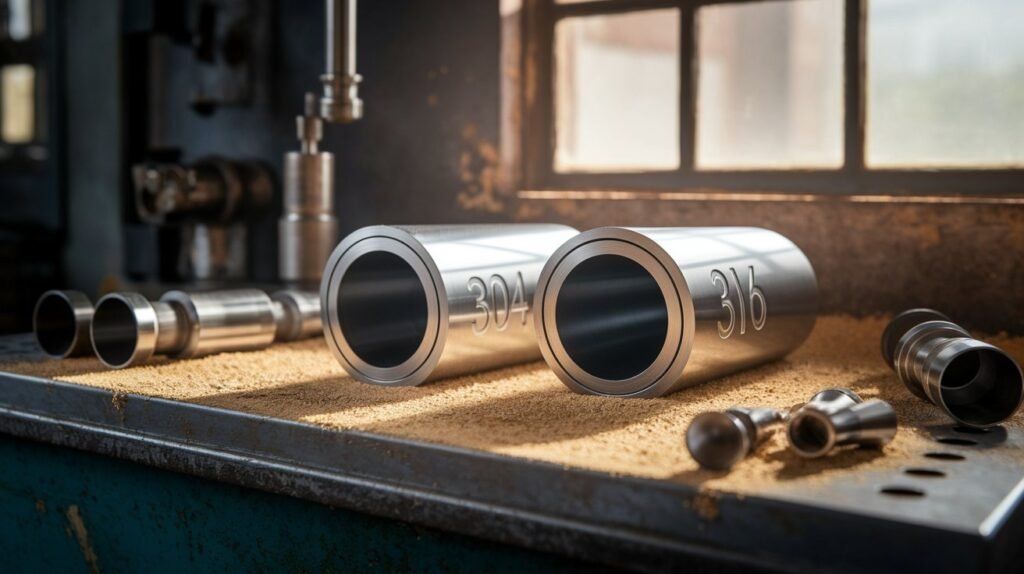
Difference Between SS 304 and SS 316 Grade in Chemical Composition
When selecting stainless steel for industrial use, most engineers and buyers narrow their choices down to two popular grades: SS 304 and SS 316. Both belong to the austenitic stainless steel family and are widely used in manufacturing, fabrication, construction, food processing, and chemical industries. Because they look similar, many people assume they perform the same. But in real-world industrial applications, the difference can be significant and choosing the right grade affects strength, corrosion resistance, and long-term performance.
As a trusted supplier, Kalyani Stainless Steel always guides customers toward the right material based on environment, usage, and operating conditions. This article explains the important differences between SS 304 and SS 316 to help you make better purchasing decisions.
Chemical Composition: The Core Difference
The main difference between SS 304 and SS 316 lies in their chemical makeup.
SS 304 Composition
- 18% Chromium
- 8% Nickel
- Very low carbon
- No molybdenum
SS 316 Composition
- 16% Chromium
- 10% Nickel
- 2–3% Molybdenum
- Low carbon
This molybdenum in SS 316 dramatically improves corrosion resistance, especially when exposed to saltwater, chemicals, acids, and harsh industrial environments.
Corrosion Resistance Performance
If your application requires high corrosion resistance, understanding the difference is crucial.
SS 304 Corrosion Resistance
SS 304 offers good resistance to rust, oxidation, and many chemicals. It works well in indoor environments and moderate industrial conditions. But it is not suitable for high-salt or high-chlorine environments.
SS 316 Corrosion Resistance
SS 316 is known for its exceptional chloride resistance. The molybdenum added to the alloy prevents pitting, crevice corrosion, and chemical attack. This makes SS 316 the preferred choice for:
- Marine industries
- Chemical processing
- Pharmaceutical production
- Oil & gas plants
- Food & beverage machinery requiring hygiene and chemical washdowns
For deeper technical corrosion comparison, you can refer to a trusted material knowledge base like AZoM (https://www.azom.com).
Strength and Durability in Industrial Applications
In terms of tensile strength, both grades are strong and durable. Their mechanical properties are close, but SS 316 maintains its strength better in high-temperature and aggressive chemical environments.
SS 304 Strength Uses
- Fabrication
- Architecture
- Decorative railings
- Mild industrial machinery
- Kitchen equipment
- General plant use
SS 316 Strength Uses
- Pressure vessels
- Heat exchangers
- Chemical tanks
- Marine hardware
- Pharmaceutical machinery
- Industrial pipelines exposed to corrosive chemicals
For mechanical property charts, see the engineering database Matmatch (https://matmatch.com).
Cost Comparison: Which One Is More Economical?
SS 304 is the more economical option because it contains no molybdenum and slightly less nickel. If your environment is not highly corrosive, SS 304 performs well and helps reduce project costs.
SS 316 costs more, but the investment is justified when you need higher corrosion and chemical resistance. It dramatically reduces long-term maintenance, replacement, and downtime.
Weldability and Fabrication
Both SS 304 and SS 316 offer excellent weldability, forming, bending, and fabrication capabilities.
- SS 304 is easier to form and weld.
- SS 316 also welds well but requires slightly more care due to molybdenum content.
For fabrication guidelines, the website The Welding Institute (TWI) provides reliable welding articles (https://www.twi-global.com).
Industrial Applications Comparison
Where SS 304 Is Commonly Used:
- Stainless steel pipes for general industries
- Railings and architectural structures
- Food equipment (non-chemical wash areas)
- Storage tanks
- Households and interior fittings
Where SS 316 Is Preferred:
- Chemical storage tanks
- Pharma clean rooms
- Saltwater pipelines
- Sewage treatment machinery
- Oil & gas refinery components
- CIP (clean-in-place) equipment in food plants
Which Grade Should You Choose?
To make the right choice, ask these questions:
Choose SS 304 if:
- Your environment is mild or moderate
- The metal is not exposed to corrosive chemicals
- You want a more economical solution
- The application is decorative or architectural
Choose SS 316 if:
- You deal with harsh chemicals, acids, or saltwater
- Hygiene and sterilization are important
- You need long-term durability with minimal maintenance
- You require strong resistance in outdoor or industrial coastal environments
Conclusion
The difference between SS 304 and SS 316 may seem small on paper, but in industrial applications, it affects long-term performance, safety, and cost. SS 304 is a reliable, economical choice for general use, while SS 316 is the best option for aggressive and chemical-rich environments.
At Kalyani Stainless Steel, we supply both grades with high precision and quality assurance. Whether you need stainless steel pipes, tubes, or fabrication material, our team is always ready to guide you.
For more information on stainless steel grade selection, you can explore International Stainless Steel Forum (ISSF) (https://www.worldstainless.org).